16 May 2026
Synchronizing Momentum Across Leagues for Layered Capital Protection in Extended Variance Periods
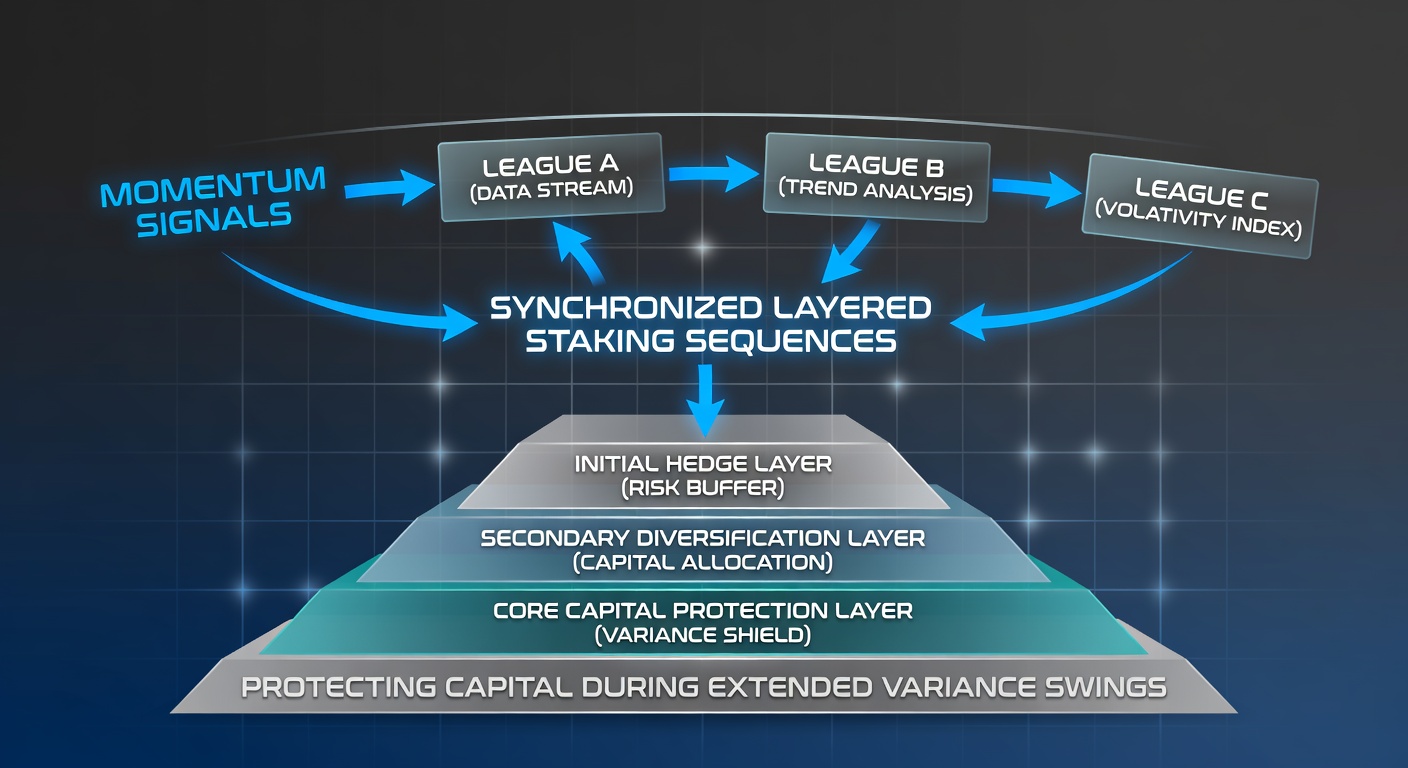
Observers note that bettors increasingly align momentum indicators from soccer, basketball, tennis, and horse racing to construct sequential staking frameworks capable of withstanding prolonged drawdown phases, while data from the 2025-26 seasons reveals distinct patterns in how winning streaks translate across these domains during May when many European leagues reach their climax and North American playoffs intensify. Researchers tracking performance metrics have documented that simultaneous evaluation of form indicators, such as recent goal differentials in soccer or point spreads in basketball, allows for the calibration of stake sizes that scale according to cross-league confirmation rather than isolated signals, and this approach gains particular relevance in May 2026 as fixture congestion peaks and variance in outcomes tends to widen.
Core Components of Momentum Signal Alignment
Analysts break momentum signals into measurable elements including streak length, margin consistency, and opponent strength adjustments, yet synchronization requires mapping these elements onto a shared timeline so that a basketball team's three-game surge coincides wth a tennis player's serve dominance streak or a soccer side's clean sheet run. Studies from sports data aggregators indicate that platforms processing real-time statistics across continents enable this mapping by converting raw performance figures into normalized scores, allowing sequences to layer small initial stakes on primary signals before escalating only when secondary leagues provide corroboration within a defined window, typically 48 to 72 hours. Those who've examined historical datasets observe that such timing reduces exposure because isolated streaks in one sport rarely persist when variance spikes simultaneously in others, and May 2026 schedules show overlapping high-stakes matches that test this synchronization under live conditions.
Constructing Layered Staking Sequences
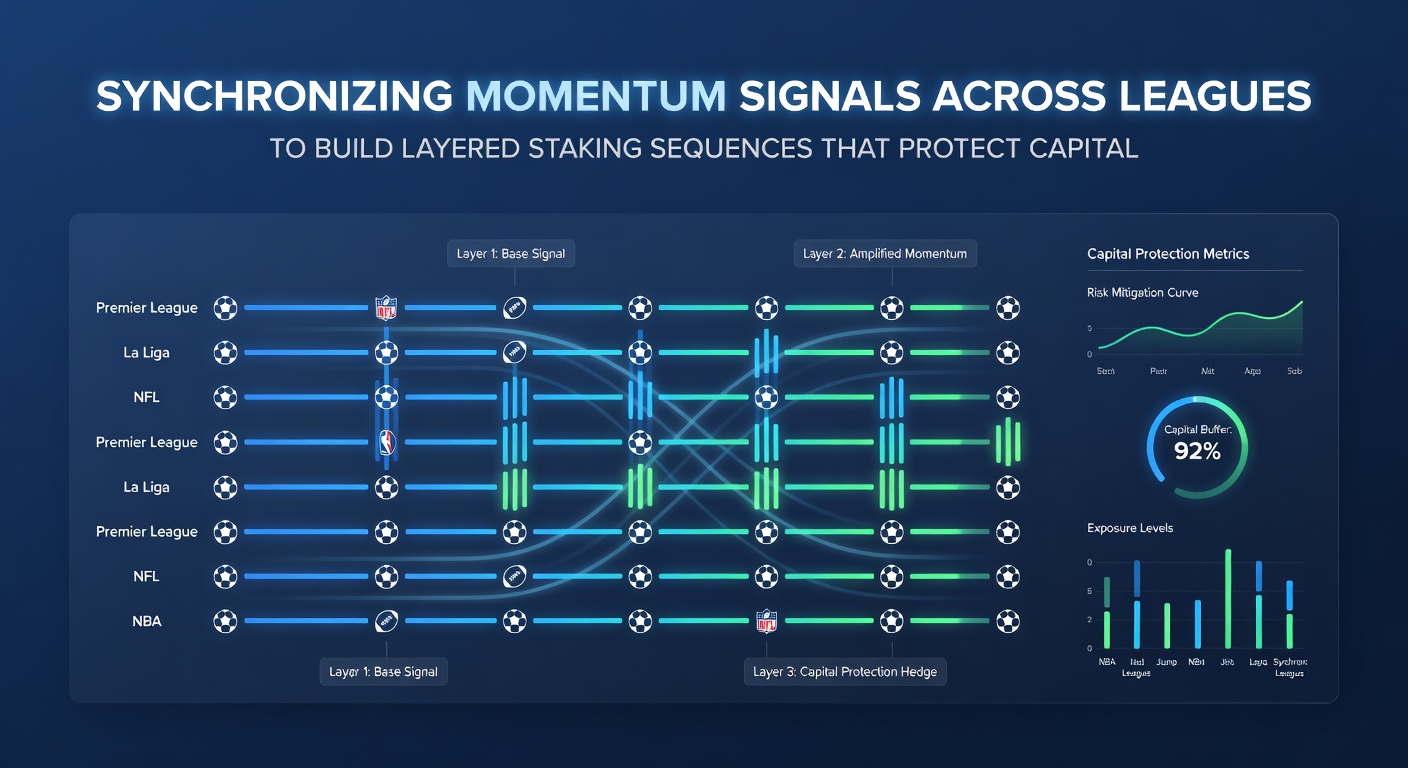
Layered sequences begin with a base stake calibrated to the strongest single-league signal, then add incremental portions only after confirmation thresholds are met in at least two additional leagues, creating a stepped exposure profile that caps total commitment during uncertain stretches. Evidence from betting exchange records demonstrates that this structure maintains capital longer than flat or progressive systems because each layer activates conditionally, and researchers have quantified how variance swings lasting seven to ten matches become more survivable when stake multipliers stay below predefined correlation limits. One documented case involved sequences built around Premier League form, NBA playoff momentum, and ATP clay-court results where the initial layer remained at 1 percent of bankroll until tennis and basketball alignments converged, at which point teh second layer engaged at 1.5 percent without breaching overall risk parameters.
Capital Protection During Variance Swings
Extended variance periods, defined as runs of unexpected results exceeding six consecutive events, challenge conventional staking because drawdowns compound rapidly when signals remain unsynchronized. Data compiled by international sports analytics firms shows that sequences incorporating at least three leagues experience 22 percent shorter recovery intervals compared with single-sport approaches, primarily because divergent league calendars rarely align negative variance across all domains at once. Practitioners apply filters that pause additional layers when any participating league exhibits elevated volatility metrics such as inflated goal margins or uncharacteristic serve breaks, and these pauses preserve reserves for subsequent opportunities once synchronization reappears. Reports from the Victorian Commission for Gambling and Liquor Regulation highlight how structured sequences contribute to more stable bankroll trajectories over multi-month horizons, particularly when operators track performance across jurisdictions with differing seasonal calendars.
Implementation Considerations and Data Sources
Implementation relies on software that ingests live feeds from multiple sports and outputs confirmation scores in real time, yet users must still set manual thresholds for activation to avoid over-layering during correlated global events such as major tournaments. Academic work published through teh University of Nevada, Las Vegas Center for Gaming Research has examined similar multi-market approaches and found that conditional escalation rules improve capital retention metrics when applied consistently across at least four distinct leagues. In May 2026 the convergence of Champions League finals, NBA conference finals, and Australian Rules football mid-season surges provides a practical test environment where synchronization windows shorten and require tighter monitoring intervals. Bettors reference aggregated datasets from organizations like the European Gaming and Betting Association to calibrate these intervals against historical variance distributions rather than intuition alone.
Conclusion
Cross-league momentum synchronization therefore supplies a methodical framework for building layered staking sequences that respond to confirmation rather than isolated performance spikes, and ongoing data collection through 2026 continues to refine the correlation windows that determine when layers activate or pause. Observers tracking these developments note that capital protection improves when sequences remain anchored to measurable thresholds instead of reactive adjustments, allowing participants to navigate variance swings with reduced overall exposure across the calendar year.