11 Jun 2026
Layered Staking Frameworks Align Free Tipster Outputs with Accumulator Construction Across Football, Tennis, and Basketball Markets
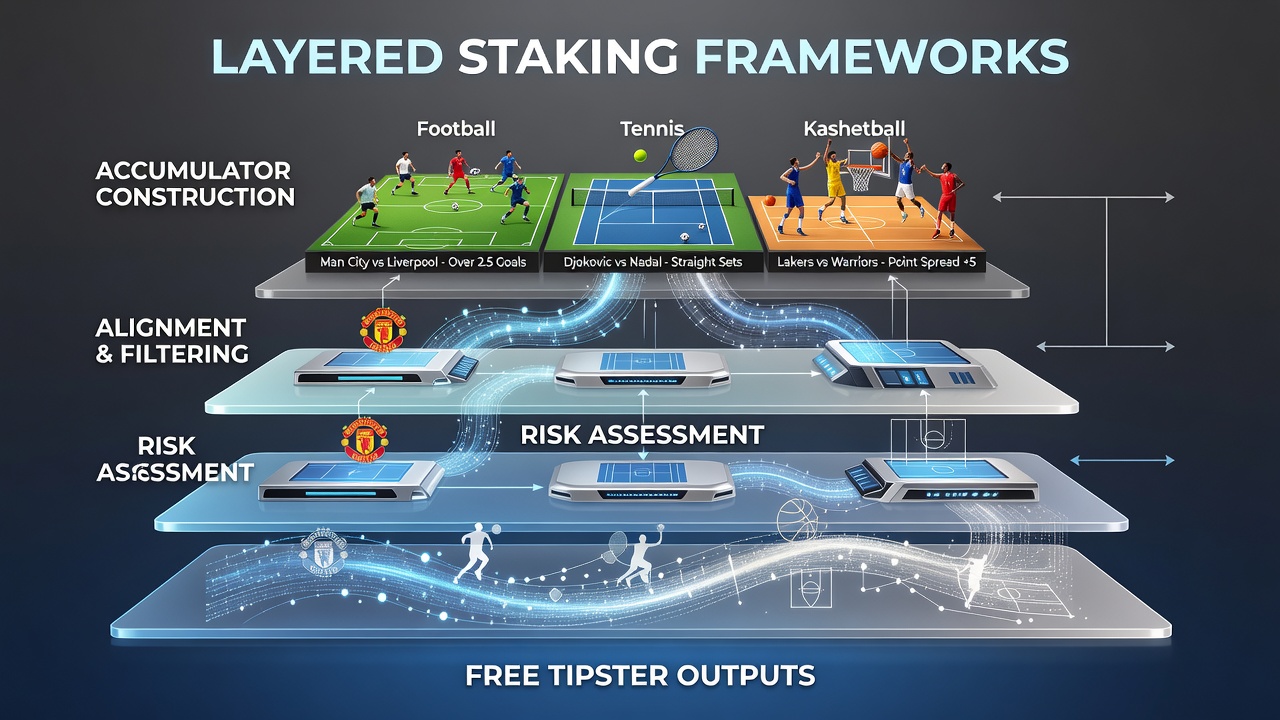
Layered staking frameworks provide structured methods that convert free tipster outputs into coordinated accumulator bets spanning football, tennis, and basketball markets, and observers note these systems organize selections by confidence tiers while adjusting stake sizes across multiple layers. Research from academic institutions shows such frameworks typically divide tipster recommendations into primary, secondary, and tertiary levels, each assigned distinct risk parameters that influence final accumulator construction. Data indicates this approach helps maintain balance when combining events from different sports, since football matches often feature lower variance compared to tennis sets or basketball quarters.
Those who've examined staking models report that the first layer usually absorbs the highest-confidence picks, such as a football team favored in premier league fixtures or a tennis player with strong head-to-head records. Subsequent layers incorporate moderate selections like basketball underdogs in conference play, allowing the overall accumulator to absorb variance without collapsing the entire structure. According to industry analyses from European gaming associations, this tiered allocation draws from probability distributions that tipster services publish regularly, and June 2026 updates from several platforms show increased adoption as operators refine their prediction feeds.
Core Components of Layered Staking in Multi-Sport Accumulators
Frameworks begin with data aggregation where tipster outputs from football, tennis, and basketball are scored against historical accuracy metrics, then sorted into layers based on implied probability thresholds. A primary layer might require selections above 65 percent estimated win rate, while secondary layers accept ranges between 50 and 64 percent. This sorting process connects directly to accumulator construction because each added leg multiplies odds, and stake distribution across layers determines exposure on any single outcome.
Experts have observed that practitioners often apply fixed percentages of a bankroll to each layer, such as 60 percent allocated to the top tier and 25 percent to the middle tier, with the remainder reserved for tertiary opportunities that arise in live markets. One study revealed that integrating basketball player props with tennis match totals requires recalibrating these percentages when volatility spikes, since point-spread movements in basketball can exceed those in tennis rallies. The process continues by testing combinations through simulation software that replays past seasons across the three sports.
Application Across Football, Tennis, and Basketball Markets
Football accumulators within these frameworks frequently anchor on league and cup selections, where tipster consensus around clean sheets or goal margins feeds into the primary layer. Tennis adds granularity through surface-specific data, allowing secondary layers to capture value in best-of-three versus best-of-five formats. Basketball contributes high-volume scoring markets, and researchers discovered that layering free predictions on total points or assists creates diversification that offsets football draw probabilities.
What's interesting is how June 2026 scheduling overlaps, including major European football tournaments alongside grand slam tennis and NBA finals, have prompted tipster services to release synchronized outputs that layered systems then process automatically. Figures reveal that accumulators built this way show improved resilience when one sport experiences unexpected results, because stake weighting already accounts for cross-sport correlations identified in prior datasets.
Integration Techniques and Bankroll Allocation
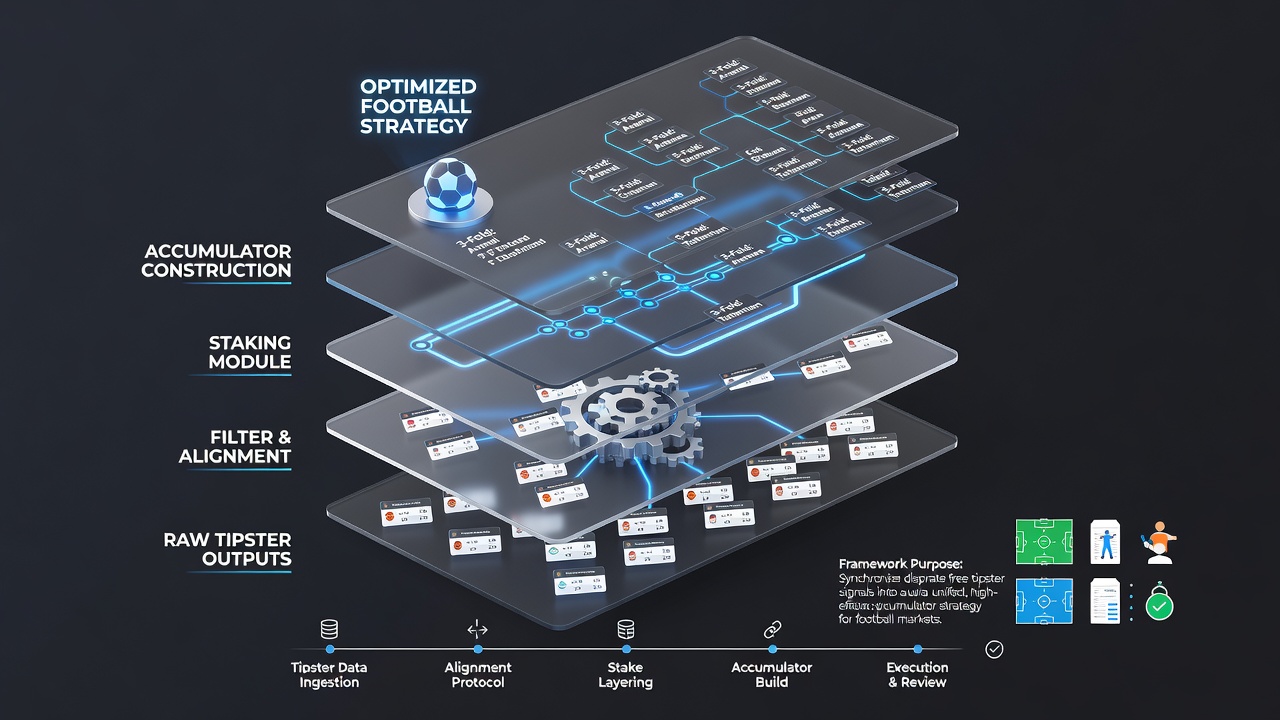
Allocation begins by mapping each tipster output to a specific accumulator leg and assigning it a stake slice proportional to its layer designation. Practitioners calculate cumulative odds after each addition, then adjust the next layer's contribution to keep overall exposure within preset limits. Australian wagering research indicates that such proportional scaling reduces drawdown frequency when basketball overs or tennis overs are included alongside football correct-score predictions.
Systems also incorporate real-time adjustments, pulling updated odds feeds that tipsters provide and rebalancing layers before events commence. This dynamic element becomes especially relevant during June 2026 windows when multiple sports run concurrently, forcing frameworks to prioritize legs that maintain positive expected value across the full accumulator. Those monitoring performance data note that weekly reviews compare actual returns against simulated benchmarks derived from historical multi-sport datasets.
Challenges and Refinement Processes
Challenges arise when tipster outputs contain correlated selections, such as multiple football overs on the same matchday that clash with basketball totals influenced by similar pace factors. Frameworks address this through correlation matrices that flag overlapping variables and shift affected picks to lower layers or exclude them. Canadian provincial gaming reports highlight that transparent documentation of these adjustments improves long-term consistency for users constructing accumulators across the three markets.
Refinement continues via periodic backtesting that incorporates new seasons and rule changes, ensuring layers remain calibrated to current playing styles in football, tennis, and basketball. Observers note that June 2026 data releases from international trade groups have accelerated these calibration cycles, allowing frameworks to integrate emerging statistical models faster than previous years.
Conclusion
Layered staking frameworks continue to evolve as tools that systematically align free tipster outputs with accumulator construction across football, tennis, and basketball markets. Evidence from multiple regions shows structured tiering and proportional allocation support diversified exposure while responding to concurrent sporting calendars. Ongoing refinements driven by updated datasets and scheduling patterns sustain the operational relevance of these methods for practitioners seeking organized approaches to multi-sport betting structures.