2 Jul 2026
Examining Travel-Induced Fatigue and Its Consequences for Outcomes in Competitive Sports Plus Forecasting Across Multiple Disciplines
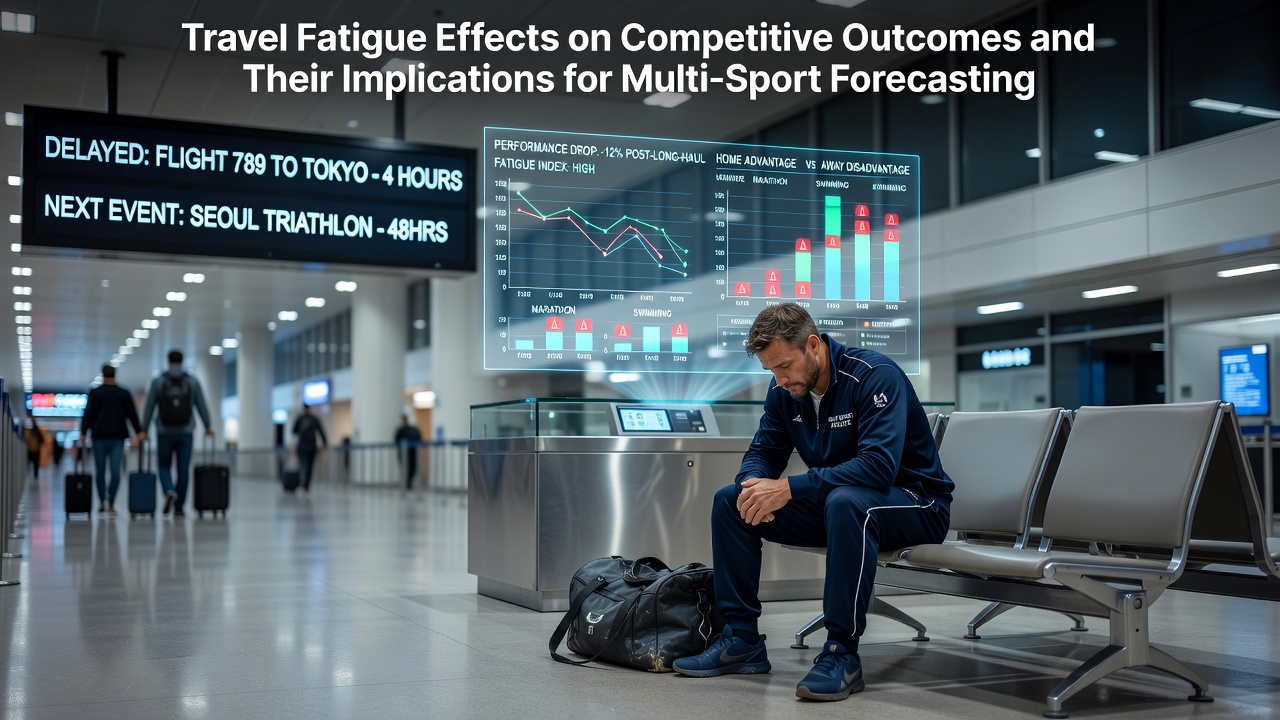
Travel fatigue arises when athletes cross multiple time zones or endure extended journeys that disrupt sleep cycles, circadian rhythms, and physical recovery; researchers have documented measurable declines in reaction time, decision-making accuracy, and endurance following such trips. Data from professional leagues shows performance gaps widen when teams travel more than three time zones eastward, whereas westward travel tends to produce milder effects because the body adapts more readily to delayed schedules. Observers note these patterns hold across basketball, soccer, tennis, and endurance events, although individual responses vary based on age, fitness level, and prior exposure to frequent flying.
Physiological Mechanisms Behind Performance Changes
Studies indicate that jet lag reduces melatonin production and elevates cortisol, which together impair muscle repair and increase perceived exertion during competition. A 2023 analysis of NBA games found visiting teams crossing two or more zones recorded 4.2 percent fewer points per 100 possessions on average, with the deficit most pronounced in back-to-back contests. Similar trends appear in European football, where clubs traveling from the Premier League to Champions League matches in Eastern Europe show elevated injury rates in the subsequent domestic fixture. Those who've studied elite cohorts report that sleep debt accumulates faster than many recovery protocols can offset, especially when athletes arrive less than 48 hours before tip-off or kickoff.
Evidence From Different Sports and Regions
In tennis, Grand Slam participants who fly from Australia to North America often display reduced serve accuracy in early rounds, according to match-tracking data compiled by the ATP; the effect diminishes by the quarterfinal stage once players recalibrate. Baseball provides another clear case, with Major League teams posting lower batting averages after coast-to-coast flights, a pattern tracked consistently over multiple seasons by league statisticians. Canadian researchers examining hockey schedules noted that teams returning from European tournaments suffered higher penalty minutes in the first two home games, suggesting lingering cognitive fatigue rather than physical injury alone. These observations span both summer and winter calendars, demonstrating the issue persists regardless of season.
Adjustments in Forecasting Models
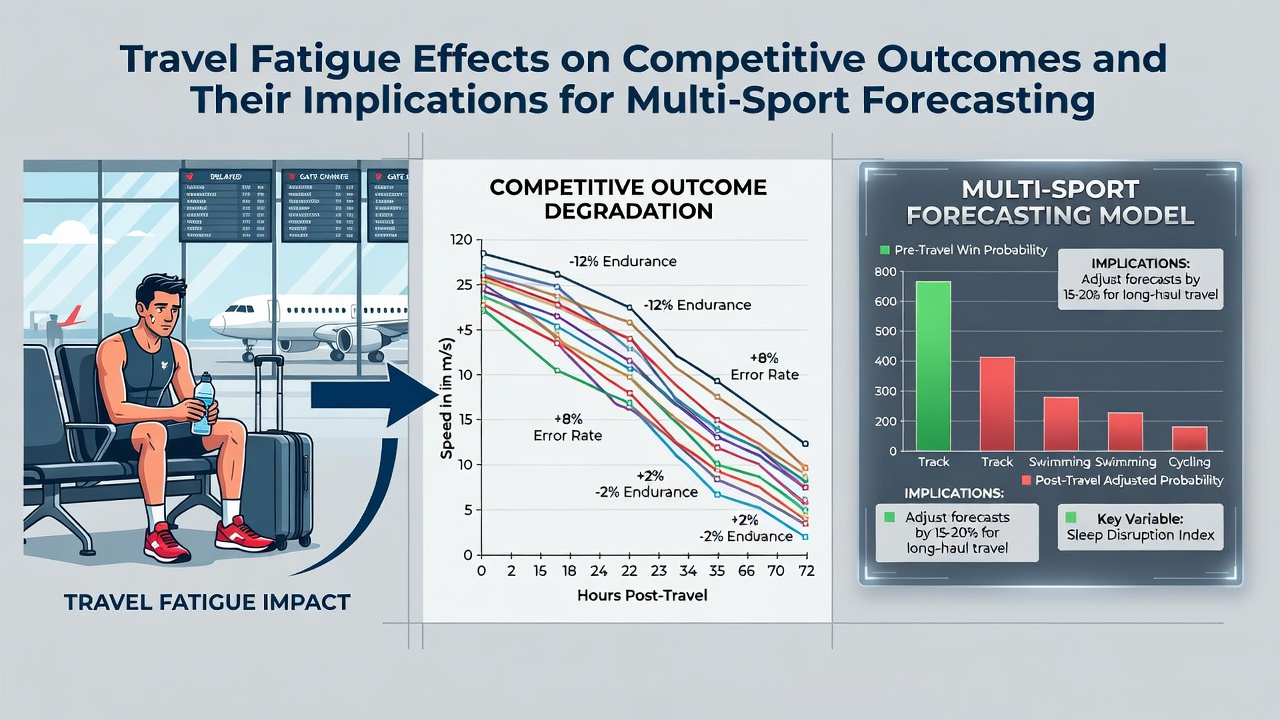
Forecasting systems that incorporate travel metrics adjust win probabilities downward for squads with heavy itineraries, particularly when rest days fall below league averages. Multi-sport platforms combine variables such as time-zone differential, flight duration, and recovery window to refine predictions for events that feature athletes from several disciplines simultaneously. July 2026 schedules already list several overlapping international tournaments, prompting modelers to weight travel history more heavily when projecting outcomes across basketball, soccer, and track events. Institutions such as the American College of Sports Medicine have published guidelines that forecasters reference when calibrating these inputs, ensuring models reflect documented physiological thresholds rather than anecdotal adjustments.
Implications for Multi-Sport Events and Scheduling
Events that cluster competitions across continents amplify the challenge, as athletes frequently transition between climates and time zones within days. Organizers have responded by inserting mandatory rest periods in some calendars, yet gaps remain in lower-tier tournaments where budgets limit charter travel. Predictive analytics teams now integrate real-time flight manifests and hotel check-in data to update probabilities closer to event start, a technique refined through collaboration with academic groups studying circadian biology. The Sports Science Institute of South Africa released findings showing that South American teams competing in European summer events experience steeper performance drops than their North American counterparts, underscoring the need for region-specific coefficients in global models.
Conclusion
Travel fatigue produces consistent, quantifiable effects on competitive results that extend across multiple sports and geographic contexts. Forecasting frameworks that embed these factors deliver improved accuracy, especially for tightly scheduled multi-discipline events. Continued collection of granular travel and performance data will allow further refinement of these models as calendars evolve through 2026 and beyond.